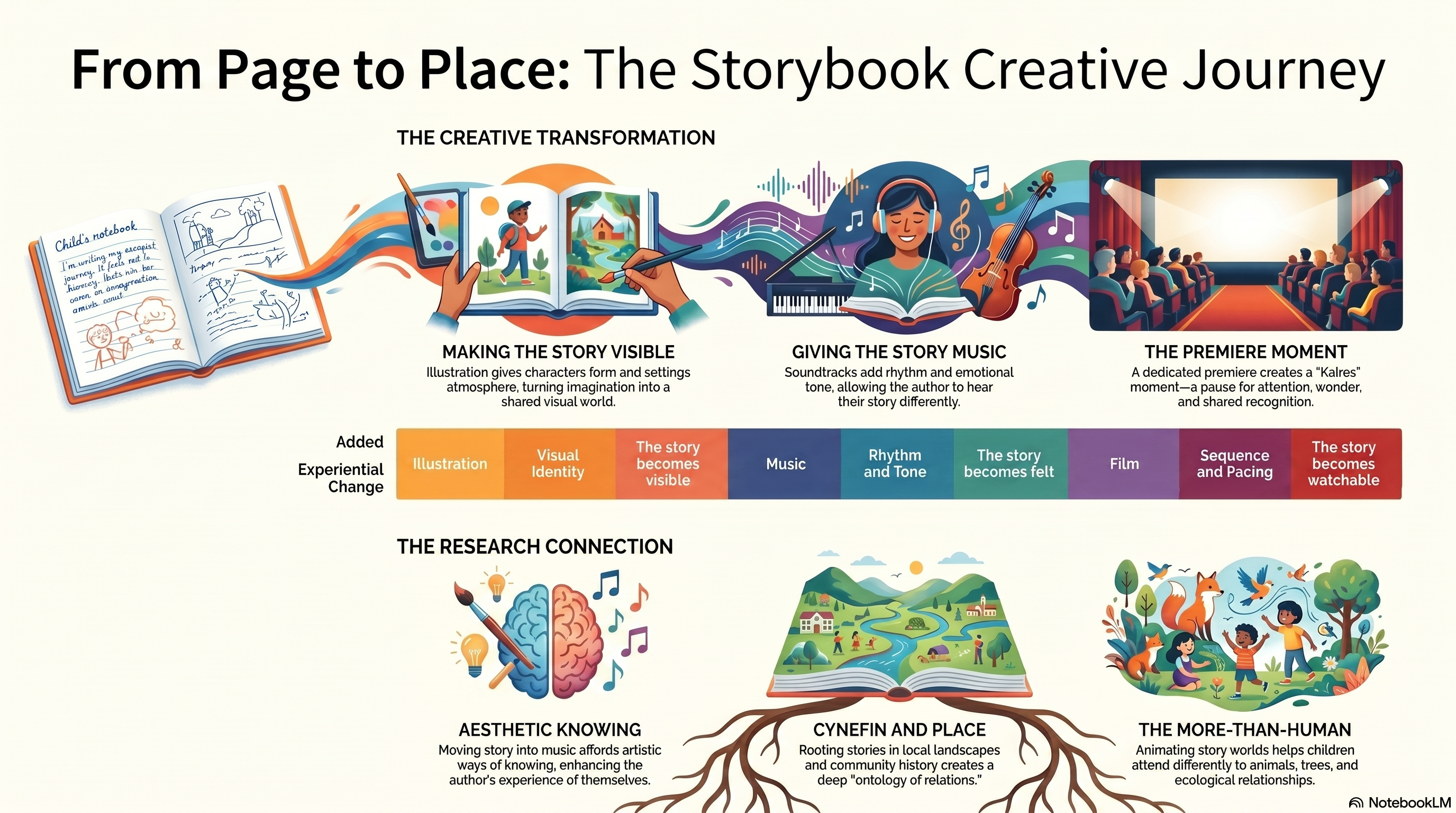
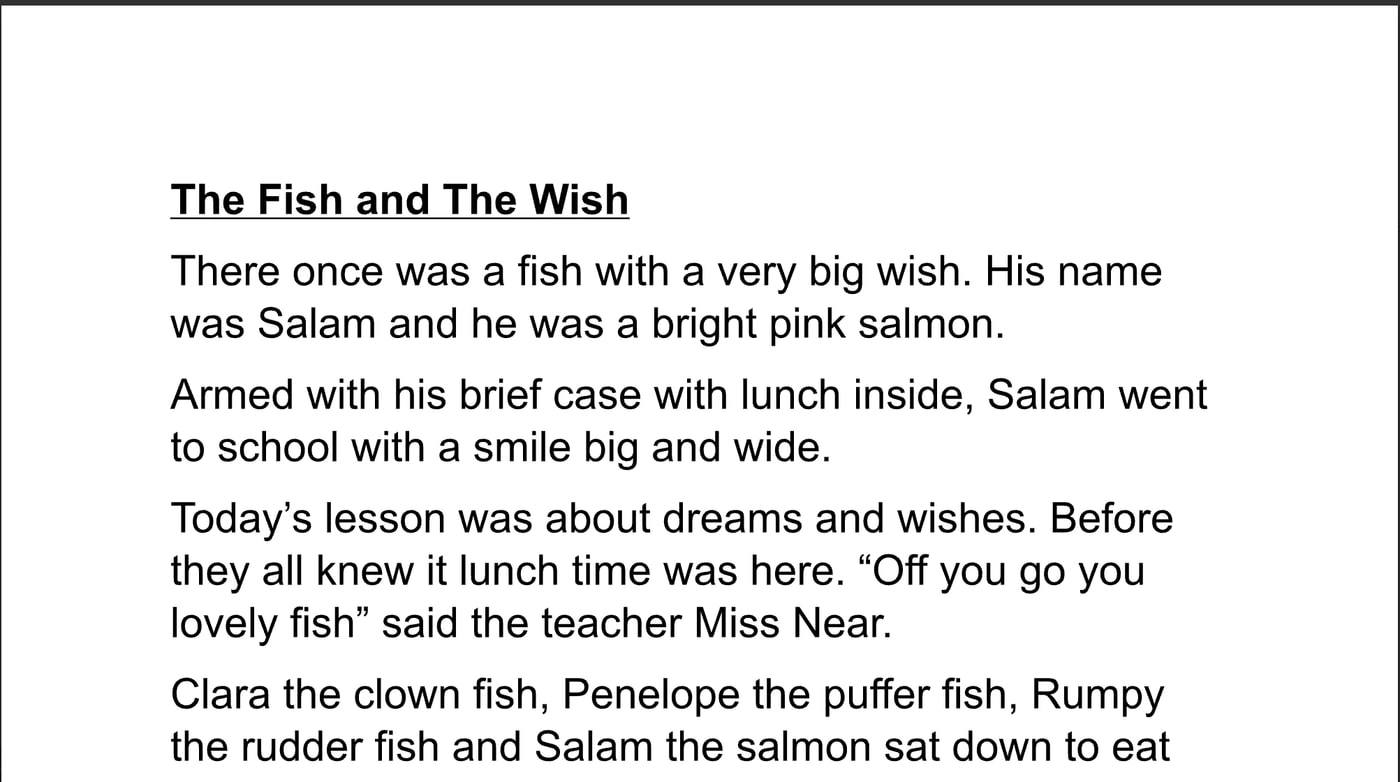
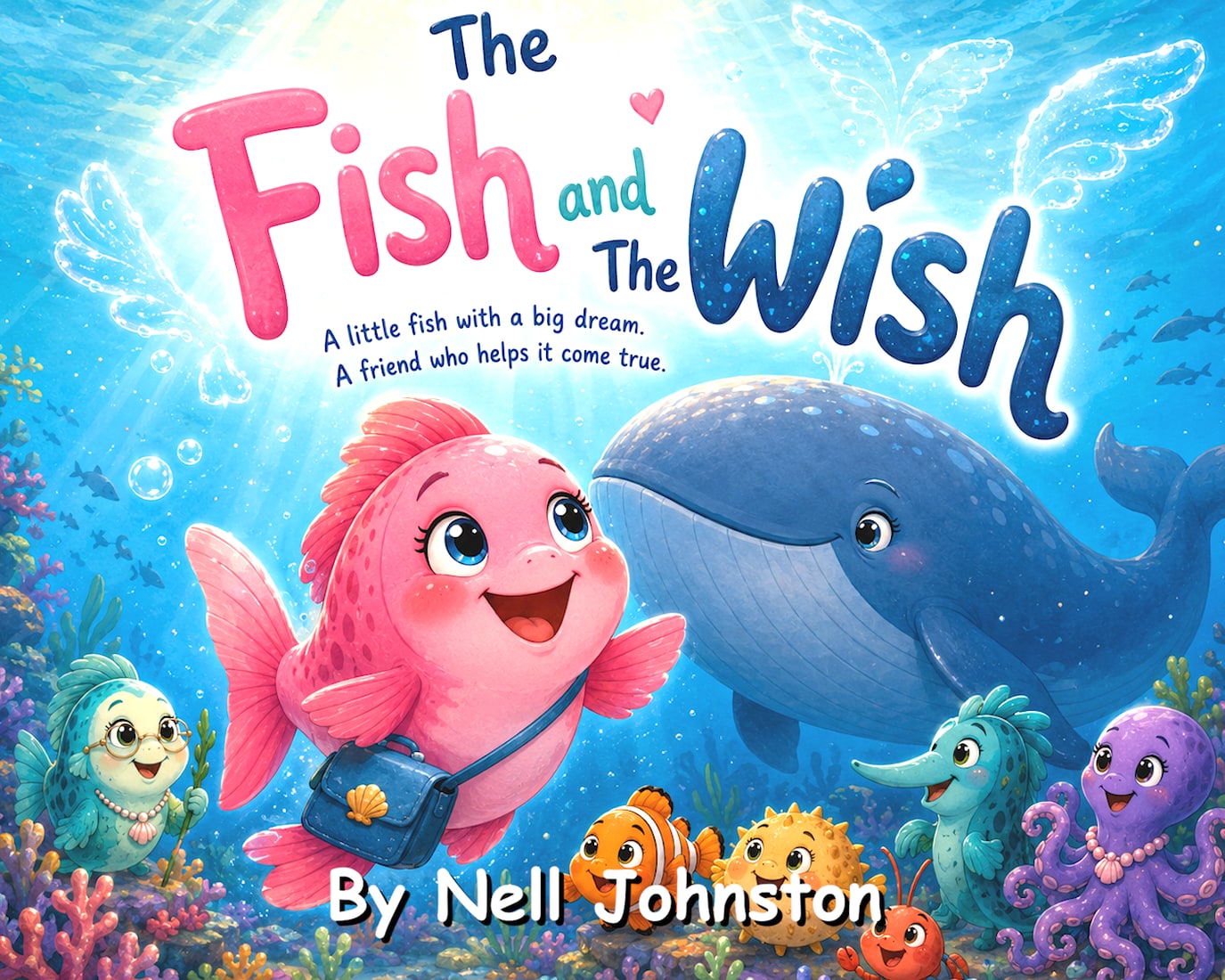
The project began with a child's story.
At first, the question was modest: could a handwritten story be given illustrations? But once characters had been made visible, the next question appeared almost immediately. What might the story sound like? Then came songs, film editing, a premiere-style viewing page, a website, business planning, research mapping and a record of the process itself.
That may sound like a story about artificial intelligence replacing a creative team. It is not. The more interesting lesson is about what happens when generative AI is used inside a human-led process where each output becomes the next thing to think with.
The productivity gain was not simply that one task became faster. It was that the loop between imagination, production, judgement and revision became shorter.
Productivity is not just speed
Most public discussion of AI productivity asks whether a tool saves time on a defined task. That is a reasonable starting point. Studies have found productivity gains in areas such as customer support, professional writing and software development. For example, Brynjolfsson, Li and Raymond found that a generative AI assistant improved productivity among customer support agents, with particularly strong gains for less experienced workers.
Other studies are more cautious. Research on consultants using GPT-4 describes a "jagged technological frontier": AI can help substantially on tasks within its capability, but can mislead or reduce quality when users rely on it in the wrong places. That warning matters. Faster production can also mean faster mistakes, faster overconfidence and faster production of plausible-looking nonsense.
The Storybook case sits somewhere different from these task studies. It was not one worker using AI to complete one predefined task. It was an unfolding creative workflow. The work kept changing shape. A character image suggested a page sequence. A page sequence suggested music. Music suggested pacing. A film suggested a premiere page. A premiere page suggested a business model. The business model suggested research questions. The research questions led back to public writing and a productivity audit.
source story -> characters -> pages -> song -> film -> premiere page -> website -> business model -> research synthesis -> public communication -> productivity audit
The output became the next prompt
This is the key point. In the Storybook process, the artefacts were not just outputs. They were working materials. A generated image was not only a picture; it was a way of seeing whether a character felt right. A song was not only audio; it revealed tone, rhythm and emotional pacing. A story map was not only a planning document; it made sequence and movement visible before the film was finished.
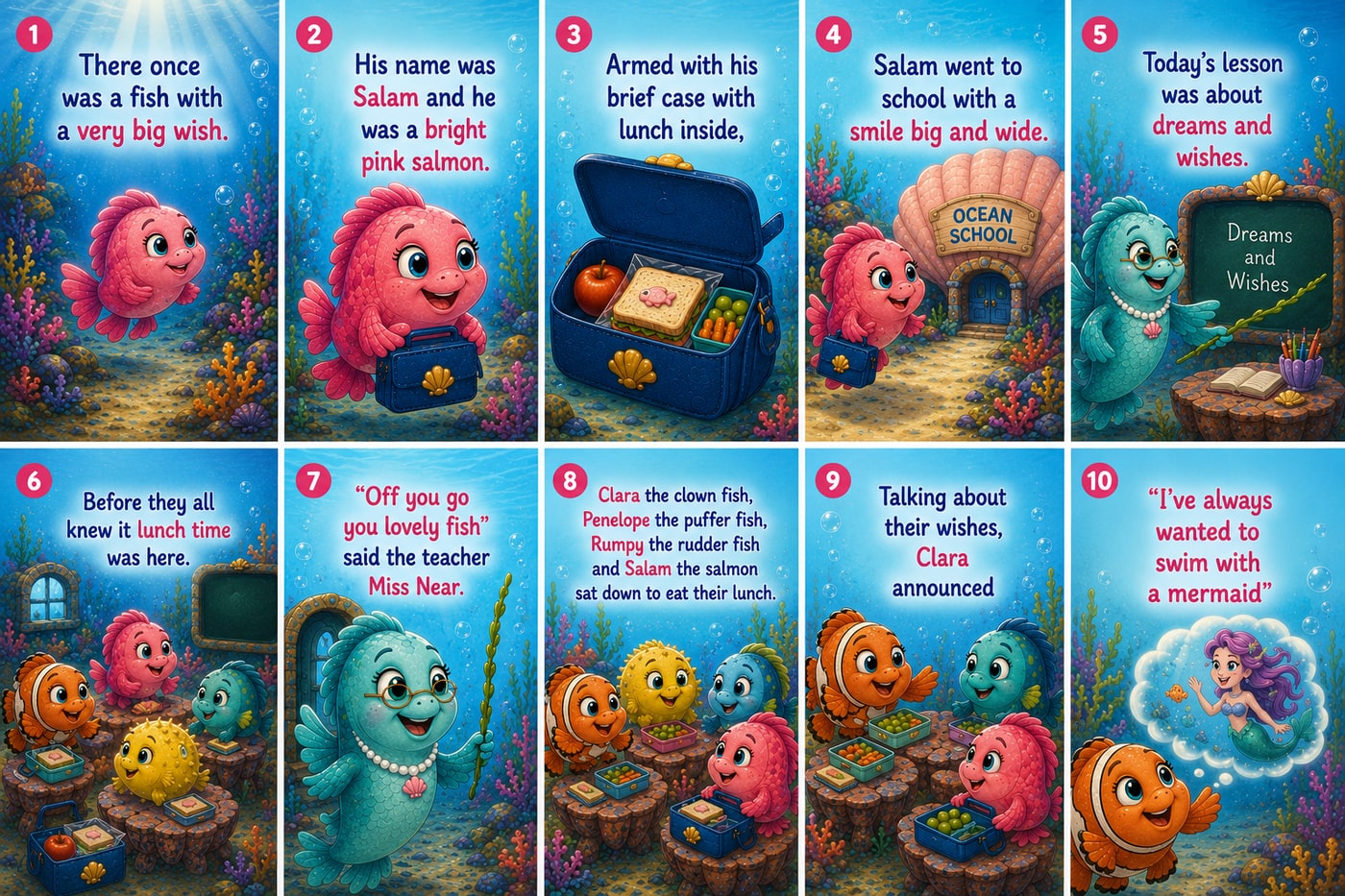
That is why the academic version of this argument uses the phrase "recursive acceleration". The word sounds technical, but the idea is simple. Each version of the work changes what can be noticed next. When AI helps make provisional artefacts quickly, the human can judge, reject, adjust and reframe earlier in the process.
This does not remove human labour. It changes where the labour sits. The work becomes less about waiting for the first artefact to exist and more about deciding what the artefact means, whether it is faithful to the source, what should be kept, what should be discarded and what question it now raises.
Artificial intelligence and intelligence amplification
The distinction between AI and IA helps here. AI usually refers to artificial intelligence: systems that can generate, classify, summarise, predict or transform material. IA, or intelligence amplification, is an older idea. Douglas Engelbart's 1962 report, Augmenting Human Intellect, imagined computing as part of a larger system for extending human capability. J.C.R. Licklider's earlier idea of man-computer symbiosis also described a partnership in which humans set goals and evaluate outcomes while computers handle routinised work that prepares the way for insight.
That is a better frame for Storybook than automation. AI helped generate options, organise material, draft text, support web production and move quickly between formats. But human intelligence supplied the purpose, taste, caution and care. It decided that the original child author should still be audible inside the finished work. It recognised when polish might become distortion. It kept asking what should not be claimed.
In this sense, the productive unit was not the AI tool on its own. It was the human-AI system: source material, generated artefacts, judgement, selection, revision, research, ethics and communication working together.
Why this matters beyond one film project
Storybook is a creative case, but the pattern is familiar across knowledge work. Many projects do not begin with a complete plan. They begin with a fragment, a question or an uncertain brief. People make something provisional, inspect it, learn from it, change the question and make again.
Conventional workflows often slow this down through handovers. One person writes a brief. Another creates visuals. Someone else edits. Someone else builds a web page. Research and communication may happen much later, if they happen at all. There are good reasons for specialist roles, but each handover creates delay and translation work.
Generative AI can collapse some of that distance. It can let a person or small team see a rough version sooner, test alternatives earlier and move between media with less friction. But this is only productive if the human side of the system becomes more discerning, not less.
The danger is that AI can accelerate the wrong thing. It can make more files, more text, more images and more confident explanations without creating more understanding. In a project built from a child's story, that risk is especially clear. Speed is valuable only if the story remains recognisable.
The new skill is documented judgement
One practical lesson from this case is that process evidence matters. The Storybook folder became a trace of the work: source material, images, audio, film files, web pages, research documents and timeline audits. It does not capture every decision or prompt, but it does show the development of the project across forms.
This is relevant to education and professional work. As AI-assisted outputs become easier to produce, the finished artefact alone tells us less about the thinking behind it. People will increasingly need to show how they used AI, what they accepted, what they rejected, how they checked claims and where human judgement shaped the result.
That may be one of the most important productivity lessons. AI can help produce artefacts faster. But responsible AI-assisted work also needs a stronger account of judgement: what was made, why it was kept, what was changed, what was verified and what ethical limits were observed.
The Storybook case does not prove that AI makes all creative work better or faster. It does not show that the films have educational, therapeutic or commercial impact. Those would require further research. What it does show is more specific: a human-led AI workflow can compress the creative feedback loop and make a project move quickly between making, reflection and reframing.
The product was not only the films.It was the speed at which each artefact became the next question.