Recursive Acceleration: A Practice-Led Case Study of AI + IA Productivity in Multi-Modal Creative Knowledge Work
Abstract
This paper examines Storybook Film Studio as a practice-led case study of human-AI productivity. The case began with a child's handwritten story and, within an intensely compressed production window, developed into illustrated story worlds, songs, short films, premiere pages, a public website, business planning documents, research synthesis, public communication and audit artefacts. The paper does not claim that generative AI independently produced this work, nor that the case proves universal productivity gains. Instead, it argues that the distinctive productivity effect was recursive acceleration: the compression of the interval between source material, artefact generation, human judgement, revision, reframing and further production. Drawing on literature on intelligence amplification, human-computer symbiosis, distributed and situated cognition, generative AI productivity, creative practice research and case-study methodology, the paper positions Storybook as an artefact-rich instance of AI + IA productivity. In this formulation, artificial intelligence provided speed, variation, synthesis and production support, while human intelligence supplied purpose, taste, contextual knowledge, ethical restraint, authorship protection and interpretation. The contribution is conceptual rather than causal: the case offers a grounded description of workflow transformation in which the unit of analysis is not the AI tool, the individual task or the final output, but the evolving human-tool-artefact system through which work became thinkable, visible and revisable.
Keywords: generative AI; intelligence amplification; productivity; creative practice; distributed cognition; human-AI collaboration; case study; multimodal storytelling; workflow transformation; knowledge work.
Derivative Position
This paper develops the AI + IA productivity argument that sits alongside the Storybook academic paper, From Page to Presence. Where From Page to Presence frames Storybook as a practice of multimodal story transformation, recognition and shared meaning-making, this paper asks what the same case reveals about AI-assisted productivity, workflow transformation and intelligence amplification.
1. Introduction
Generative AI has intensified public and scholarly debates about productivity. Much of that debate asks whether AI makes particular tasks faster: writing, coding, customer support, document production, image generation or search. These questions matter. Yet they do not fully capture what happens when generative tools are embedded inside a live creative and knowledge-work process where each output changes the next question.
Storybook Film Studio provides a useful case because the process did not unfold as a single task made faster. It began with a small creative question: could a child's handwritten story be given illustrations? The process then expanded through visual design, music, film editing, premiere-page design, web publication, business modelling, research mapping, academic writing, public communication and productivity audit. Each artefact became a prompt, constraint or interpretive surface for the next stage.
The central argument of this paper is that Storybook demonstrates cycle-time compression across an emergent, multi-role creative workflow. Its productivity significance lies not only in faster asset generation, but in the compression of the loop between making, seeing, judging, revising and reframing. The case is therefore best understood as an instance of AI + IA productivity: artificial intelligence functioning within a wider system of intelligence amplification.
The claim is deliberately bounded. Storybook is not a controlled productivity experiment. It does not compare an AI-assisted workflow with a matched human-only production team. It does not demonstrate therapeutic, educational, commercial or wellbeing outcomes. It does not prove that AI always improves creative work. Its value is different: it offers an artefact-rich trace of a human-directed, AI-assisted workflow in which the boundaries between creative production, reflection, research synthesis and communication became unusually compressed.
This matters because the productivity effects of AI are unlikely to be fully understood through isolated task measures alone. Knowledge work often proceeds through recursive loops. Workers make provisional artefacts, inspect them, notice what they reveal, change the problem, gather new evidence, reframe the audience, and produce the next version. In such settings, productivity may appear less as a simple reduction in time per task and more as a change in the speed and density of the feedback system.
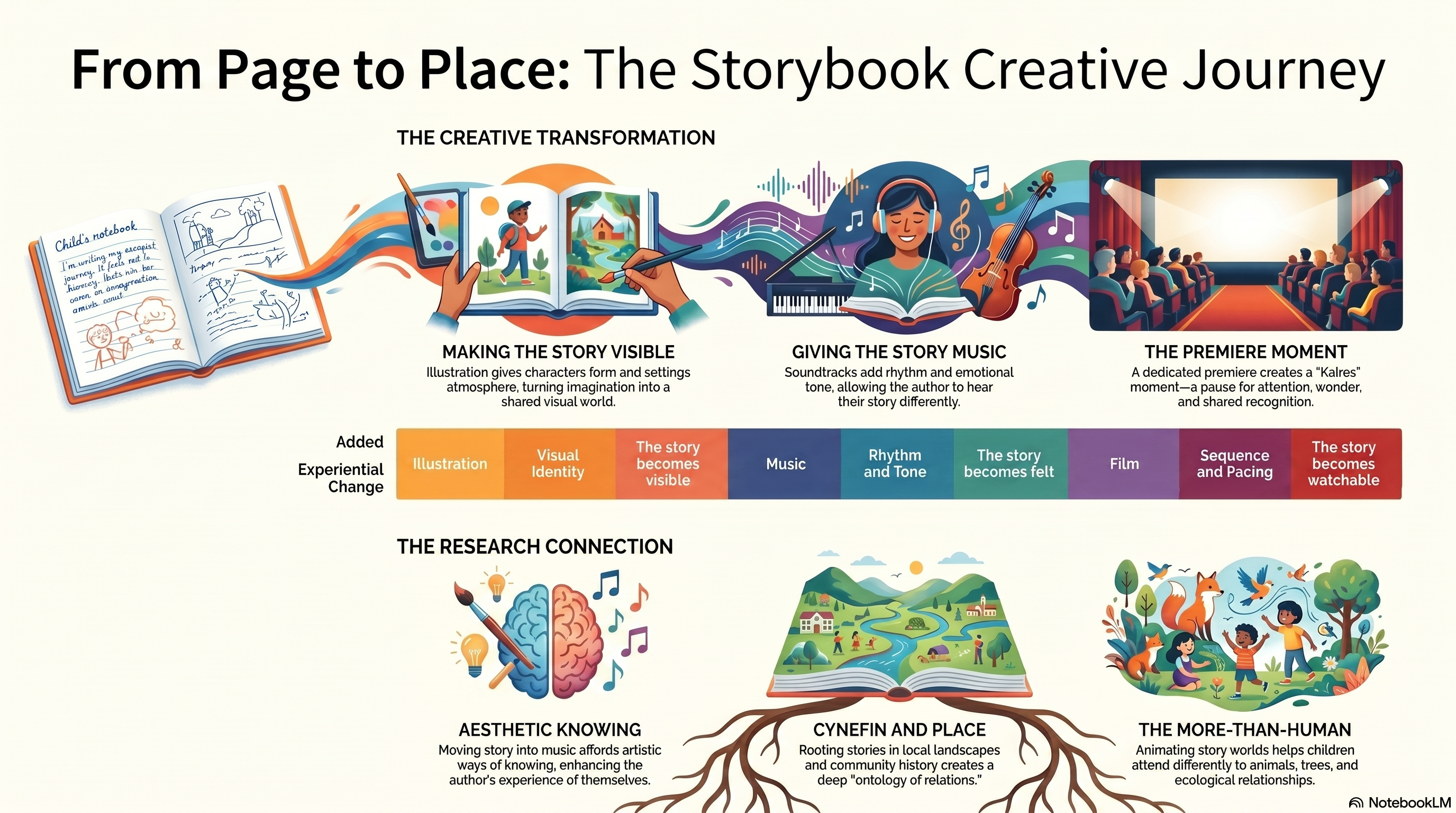
The paper develops this argument in six stages. First, it situates AI + IA productivity within earlier concepts of human-computer symbiosis and intelligence amplification. Second, it reviews relevant evidence on generative AI productivity and explains why task-based studies are necessary but insufficient for this case. Third, it frames Storybook methodologically as a practice-led, artefact-based case study. Fourth, it presents the Storybook evidence base. Fifth, it proposes recursive acceleration as the case's core contribution. Finally, it outlines implications, limitations and routes for a public-facing derivative article.
2. Literature Context: From Automation to Augmentation
2.1 Human-computer symbiosis and intelligence amplification
The idea that computers might amplify human thought rather than merely automate tasks predates contemporary AI. Licklider's account of "man-computer symbiosis" imagined a close partnership in which humans would set goals, formulate hypotheses, define criteria and evaluate outcomes, while computers performed routinizable work that prepared the way for insight and decision-making (Licklider, 1960). Engelbart's Augmenting Human Intellect similarly framed computing as a way of increasing a person's capacity to approach complex problems through a system of artefacts, language, methods and training (Engelbart, 1962).
These older formulations matter because they shift the unit of analysis. The question is not only what the machine can do. It is what the human-tool system can become capable of doing. Storybook sits firmly in this lineage. AI tools accelerated generation and synthesis, but the process depended on human purpose, judgement, selection and interpretation. The child-authored source story, the decision to protect authorial voice, the recognition that the premiere mattered, and the caution around unsupported educational or therapeutic claims were not supplied by the tools. They were part of the human system in which the tools were used.
The language of intelligence amplification also prevents a simplistic opposition between human creativity and artificial intelligence. In Storybook, AI did not replace a creative team in any complete sense. Rather, it allowed one human-directed process to temporarily span functions usually distributed across multiple roles: illustrator, songwriter, editor, web producer, strategist, researcher and public communicator. The result was not the disappearance of labour but its reconfiguration.
2.2 Distributed and situated cognition
Storybook is also usefully understood through distributed and situated accounts of cognition. Hutchins' work on distributed cognition argues that cognitive activity may be organised across people, artefacts, representations and environments rather than located solely inside an individual's head (Hutchins, 1995). Suchman's work on situated action similarly challenges the idea that work is simply the execution of pre-existing plans; action is continually reconstructed in relation to local materials, circumstances and interpretations (Suchman, 1987).
These perspectives are important for this case because Storybook did not follow a fixed plan from the beginning. The process discovered its own shape by making. A character image suggested page sequences. Page sequences suggested songs. Songs suggested pacing. Films suggested premiere pages. Premiere pages suggested a business model. The business model suggested research questions. The research questions produced approach packs, public writing and an audit of the process itself.
The folder became a cognitive environment. Assets were not merely outputs; they were representational objects that made further thinking possible. The project was therefore not just a set of tasks assisted by AI. It was a distributed working system in which source material, generated artefacts, human judgement, local files, web pages, research papers and audit documents interacted recursively.
2.3 Generative AI productivity: evidence and cautions
Early empirical studies of generative AI productivity show real but uneven gains. Brynjolfsson, Li and Raymond's workplace study of customer support agents found productivity improvements from access to a generative AI assistant, with larger gains for less experienced workers (Brynjolfsson, Li and Raymond, 2023). Noy and Zhang's experiment with writing tasks found that ChatGPT reduced task completion time and increased output quality in mid-level professional writing tasks (Noy and Zhang, 2023). Peng et al. found that developers with access to GitHub Copilot completed a coding task substantially faster in a controlled experiment (Peng et al., 2023).
Other work stresses heterogeneity and boundary conditions. Dell'Acqua et al. describe a "jagged technological frontier" in which AI improves performance on some tasks but can reduce correctness when users apply it beyond its reliable domain (Dell'Acqua et al., 2023). Recent workplace studies of integrated AI tools suggest that adoption affects some independently adjustable work patterns, such as email and document work, more readily than activities requiring organisational coordination, such as meetings or role redesign (Dillon et al., 2025a; Dillon et al., 2025b). The broader productivity literature also warns that new general-purpose technologies often require complementary organisational, process and skill changes before their full benefits appear (Brynjolfsson, Rock and Syverson, 2021; Bresnahan, Brynjolfsson and Hitt, 2002).
This evidence helps position Storybook carefully. The case should not be used to claim a simple productivity multiple or a universal AI effect. It is not equivalent to customer support, software development or document editing. Its relevance lies elsewhere: it illustrates a kind of workflow compression that task-level productivity studies may not fully capture. The case shows how generative tools can accelerate movement between modalities and domains when a human operator can continually evaluate, redirect and integrate outputs.
2.4 Creative practice, reflective making and case-study knowledge
Storybook also belongs within creative practice and reflective practitioner traditions. Schön's account of reflective practice emphasises how practitioners think through action, responding to the "back-talk" of materials and situations (Schön, 1983). Practice-led and practice-based research similarly allow making to become a form of inquiry when the creative process is documented and critically interpreted (Candy and Edmonds, 2018).
Case-study methodology supports the value of a particular case when the aim is analytical insight rather than statistical generalisation. Flyvbjerg argues that cases can produce context-dependent knowledge and can be valuable precisely because they reveal the complexity of real practice (Flyvbjerg, 2006). Yin's case-study approach similarly treats multiple sources of evidence, process tracing and clear boundaries as central to rigorous case work (Yin, 2018).
Storybook's contribution should therefore be read as conceptual and descriptive. The case does not establish causal effects in the experimental sense. It offers a dense process trace through which a new working pattern can be named, examined and made available for further inquiry.
3. Methodological Position
This paper uses Storybook as a practice-led, artefact-based case study. The primary evidence is the local project folder and its generated audit documents:
Storybook Project Timeframe Documentation.mdStorybook Complete File Inventory.csvstorybook-complete-production-timeline.html- the four premiere project folders and associated media, web, document and research outputs
The folder evidence does not capture every prompt, external generation step, conversation, judgement or moment of tacit decision-making. It records when files appeared, what form they took, how they were organised, and how the project expanded across media and domains. This makes it a partial but useful process trace.
The analysis is interpretive. It asks what kind of productivity the folder makes visible. Rather than treating file counts as direct evidence of quality or value, the paper examines the changing nature of the files: source story, characters, pages, music, film edits, reveal pages, business documents, research folders, approach packs, academic paper, public article and timeline audit. The key pattern is not volume alone but recursive movement across creative, technical, strategic and scholarly modes.
Three safeguards guide the analysis:
- No universal productivity claim. The case does not prove that AI always increases productivity or that comparable work would be impossible without AI.
- No unsupported outcome claim. The case does not demonstrate learning, wellbeing, therapy, market demand or family-memory outcomes.
- No tool-centred authorship claim. AI is treated as part of a human-directed system, not as the autonomous producer of the work.
This makes the paper closer to a conceptual case analysis than an impact evaluation. Its purpose is to articulate a researchable phenomenon: recursive acceleration in AI-assisted creative knowledge work.
4. Case Description: Storybook Film Studio
The project began at 18:52 on Wednesday 10 June, when the source material entered the process: a handwritten children's story. The first question was narrow: could the story be illustrated? Within the same evening, the folder evidence shows character images, page illustrations, map assets, a storyboard document, a Premiere Pro project and initial song files.
Over the following days, the project expanded into four separate premiere productions:
- Nell / The Fish and The Wish: the originating child-story project, with cast images, page sequence, songs, film exports, Premiere archive, website assets and reveal page.
- Ainsley / Look Closer: a second child-story pathway, with its own pages, song, film outputs, storyboard, outtakes and reveal page.
- DC / The Path Was Always There: a founder/autobiographical story project, with images, moodboards, song, film and reveal page.
- MYG / Maes-y-graig, Trefin: a family-memory/place project, with then-and-now character boards, house and location imagery, song, film and private premiere logic.
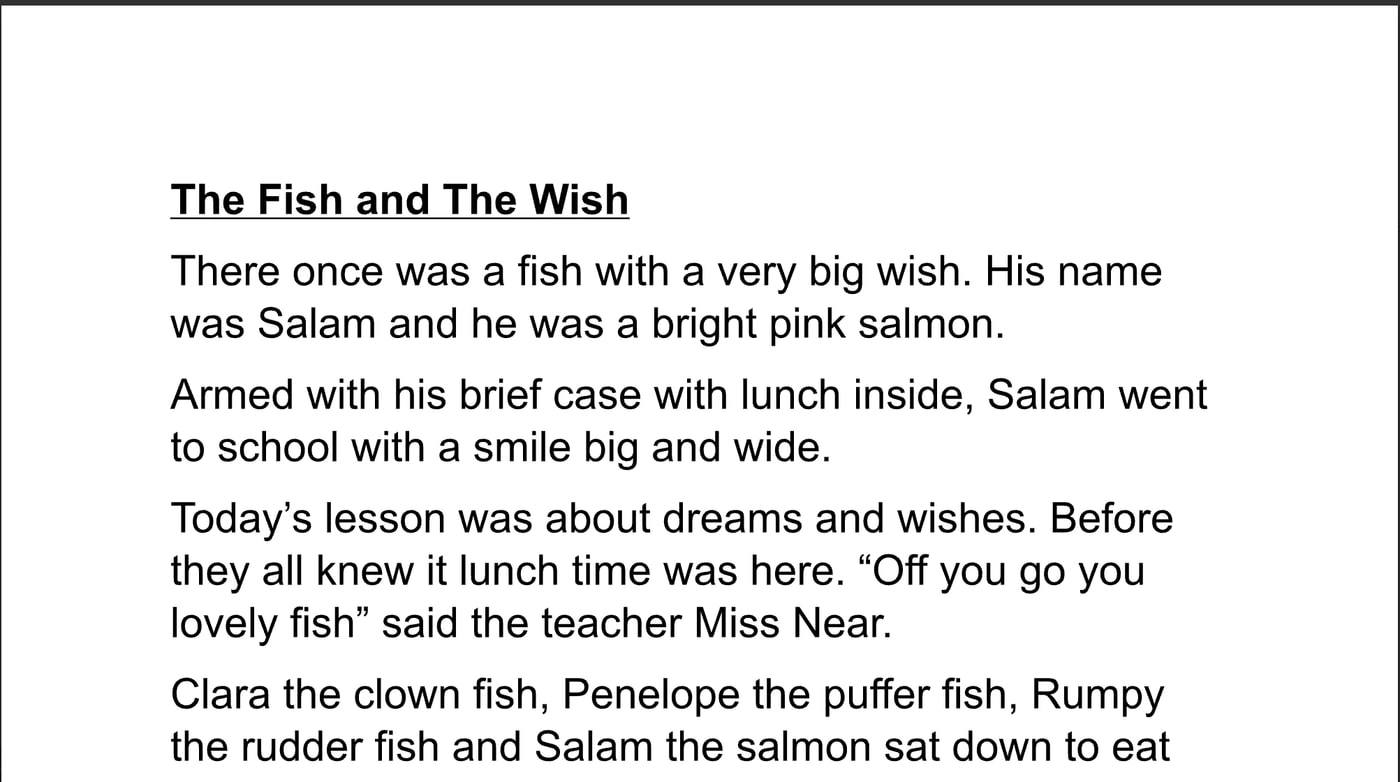
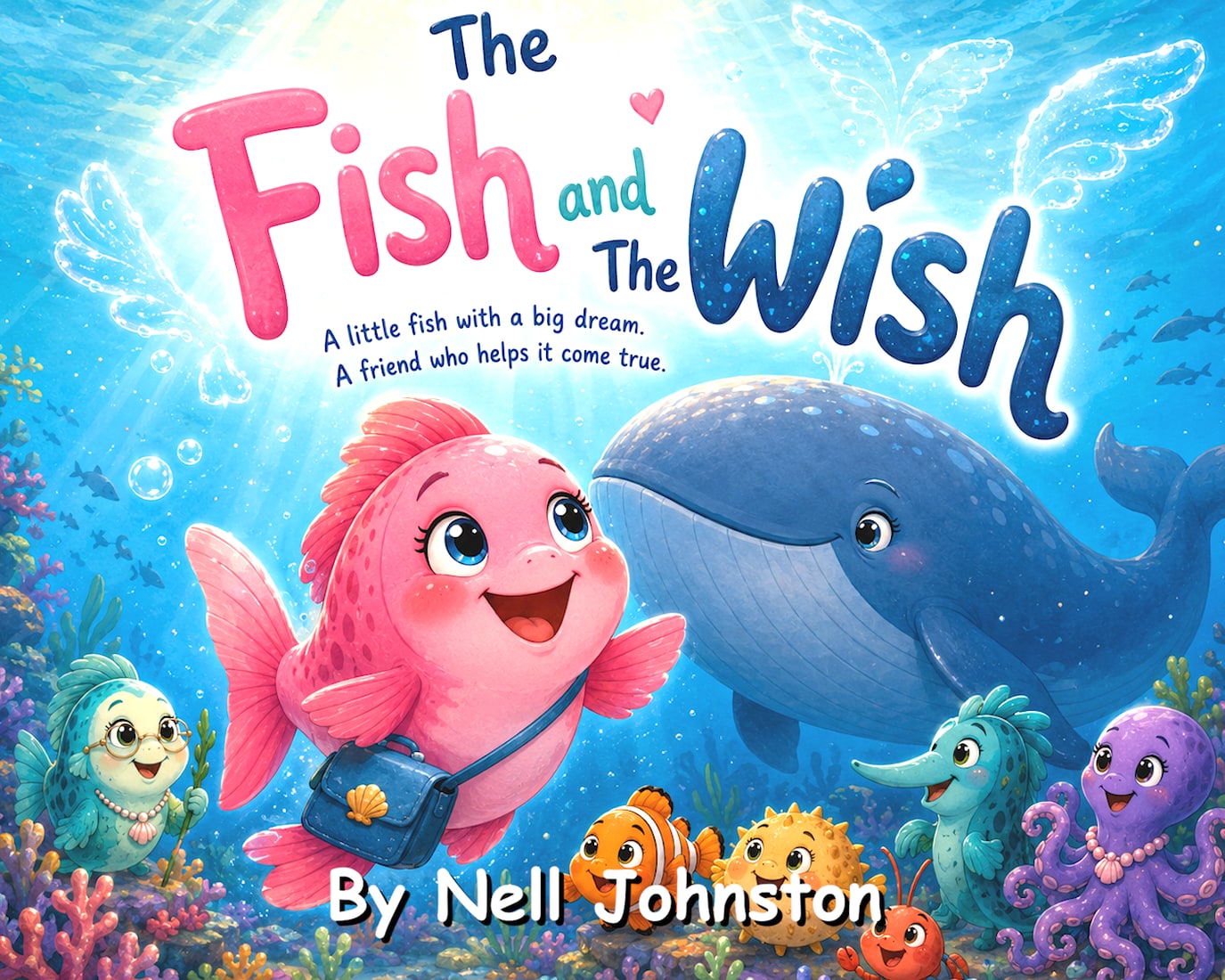
The corrected project audit identified 578 file rows, approximately 2.5 GB of project material, 356 image/design files, 22 audio/video files, 116 document/web/research files and 70 Premiere-related files. These numbers should not be inflated into a quality measure. Their significance lies in the variety and sequencing of the work.
The process moved through a chain of transformations:
source story
-> characters
-> illustrated pages
-> song and audio variants
-> film edit
-> premiere/reveal page
-> public website
-> business model
-> research profiling
-> academic position paper
-> public article
-> productivity audit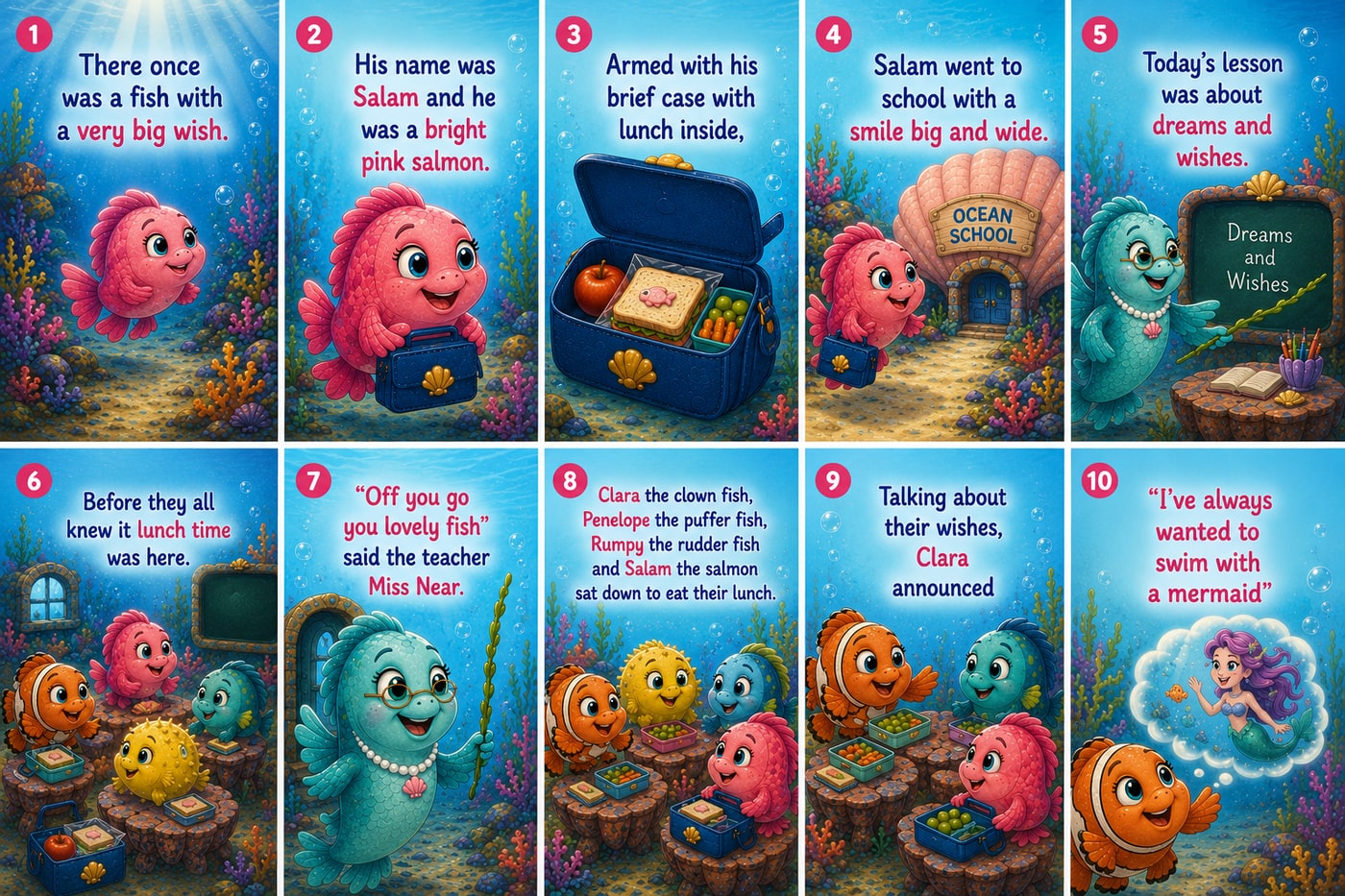
The striking feature is that the project did not simply produce more media. It repeatedly changed category. It moved from creative production to web publication, from web publication to commercial framing, from commercial framing to research positioning, and from research positioning to methodological self-documentation. In this sense, the final output was not only the films. The process itself became an artefact of inquiry.
5. Analysis: Recursive Acceleration
5.1 Defining recursive acceleration
This paper defines recursive acceleration as the compression of the interval between artefact generation, human evaluation, reframing and further production in an emergent workflow.
Recursive acceleration differs from simple task acceleration. A task-acceleration claim asks whether AI makes a defined unit of work faster. Recursive acceleration asks whether the whole working system can move more quickly between states of understanding because provisional artefacts can be generated, inspected and repurposed at speed.
In Storybook, each output had at least three possible functions:
- it was a product in its own right;
- it was evidence of the current state of the project;
- it was a prompt for the next stage of work.
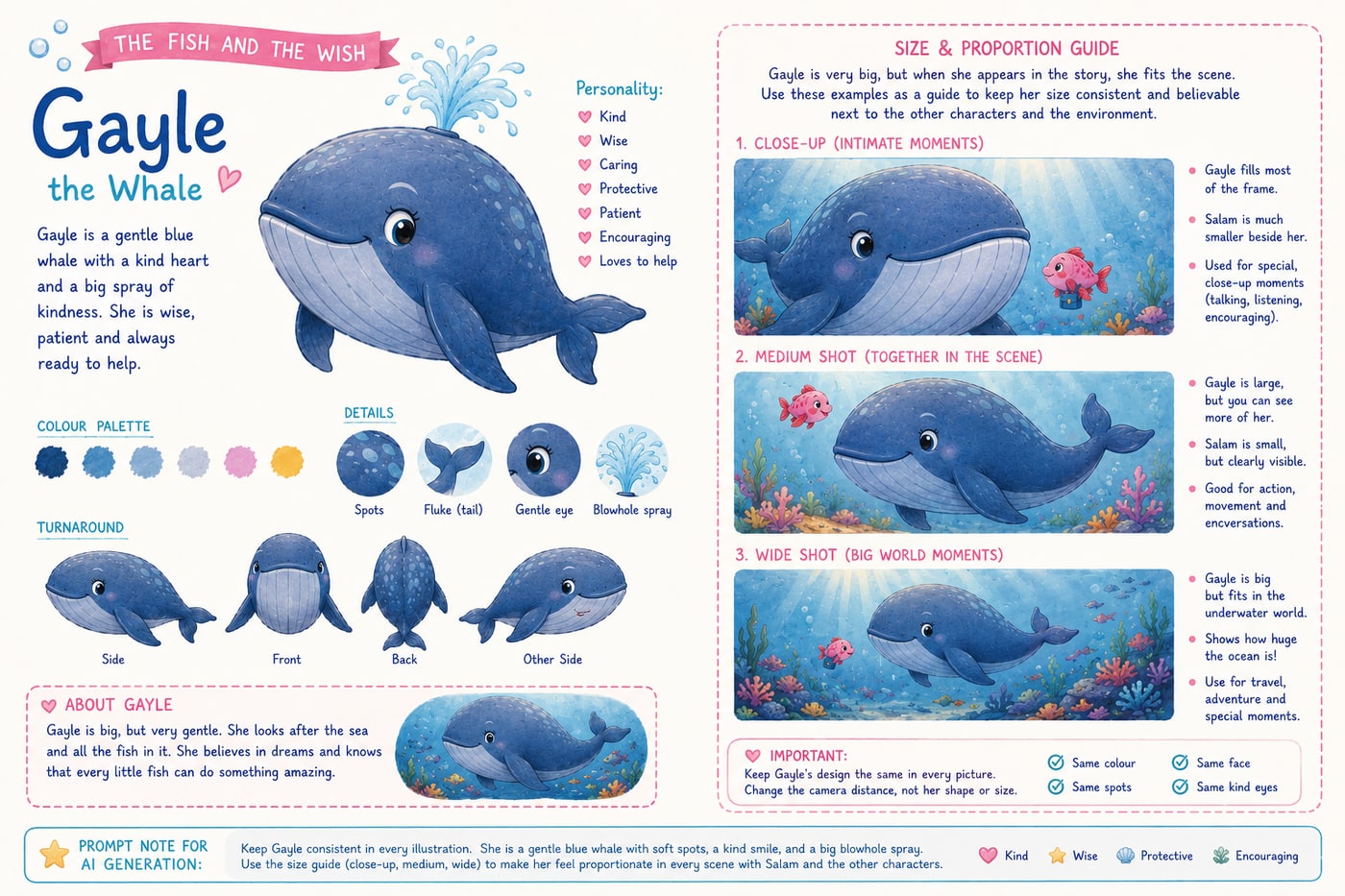
For example, a character image was not only a picture. It made the story world visible, exposed continuity needs, suggested tone, and enabled page sequencing. A song was not only audio. It revealed emotional pacing and helped shape the film edit. A reveal page was not only a web page. It reframed the film as an event and helped reveal the commercial proposition. The productivity effect came from the speed with which these artefacts could become surfaces for judgement.
5.2 The unit of productivity is the feedback loop
The conventional productivity question asks how much output is produced per unit of input. That remains relevant, but the Storybook case suggests another unit: the feedback loop.
Creative and knowledge work often depends on loops of making and reflection. A worker does not simply execute a plan. They discover the next problem by encountering the thing they have made. In a slow workflow, these loops are separated by waiting time: briefing, commissioning, producing, reviewing, revising, handing over and reinterpreting. In Storybook, many of these separations were compressed.
This is why the case should not be described merely as "AI made films quickly." The more precise claim is that AI-assisted production shortened the interval between imagination, materialisation and critique. Human judgement could operate on visible, audible and editable artefacts much earlier in the process.
5.3 AI and IA as a coupled system
The case also clarifies the difference between artificial intelligence and intelligence amplification.
AI contributed:
- rapid visual generation and variation;
- drafting, summarising and reframing support;
- music and song ideation;
- technical assistance with web and documentation tasks;
- support for organising research and audit material;
- fast movement between alternative formulations.
Human intelligence contributed:
- the originating relational context of the child's story;
- purpose and emotional judgement;
- taste, selection and rejection;
- recognition of the premiere as meaningful;
- knowledge of family, education, Cardiff Met and research context;
- ethical boundaries around children, family material, therapy, education and commercial claims;
- the interpretive decision to treat the process itself as evidence.
The productivity effect emerged from the coupling of these contributions. AI without human judgement could have generated more content but not necessarily more meaning. Human judgement without AI could have supplied care and interpretation but not the same velocity of cross-modal production. Storybook therefore supports an augmentation claim: the productive unit was the human-AI-artefact system.
5.4 Boundary work and the jagged frontier
The case also illustrates the importance of boundary work. AI was useful for producing options, but the project repeatedly required decisions about what not to claim. The Storybook academic paper, public article and research approach packs explicitly avoid claims that the work is therapeutic, educationally effective, ecologically transformative or commercially proven.
This matters because generative AI can make unsupported claims feel rhetorically fluent. The faster the workflow becomes, the more important verification, restraint and source discipline become. In Dell'Acqua et al.'s terms, the user must continually judge where the work is within or beyond the tool's frontier. In Storybook, that judgement was not a peripheral quality-control step. It was central to the workflow.
5.5 From artefact production to research operations
The project also compressed research operations labour. The timeline documentation records the rapid gathering and organisation of research materials relating to Kate North, Dylan Adams and Gary Beauchamp. This included identifying relevant researchers, saving and grouping PDFs and web references, mapping overlaps with Storybook, producing approach packs and developing a position paper.
This is not the same as completing a systematic literature review. It is better understood as rapid research orientation: locating adjacent literatures, distinguishing possible claims from unsupported claims, and creating a credible starting framework for collaboration. The productivity gain is therefore not that AI "did the research", but that a human-directed system could move quickly from creative practice to researchable questions.
6. Contribution
The paper's primary contribution is the concept of recursive acceleration as a way of describing AI-assisted productivity in emergent creative knowledge work. This contribution has four parts.
First, it shifts attention from task speed to feedback-loop compression. Storybook's most interesting productivity effect was not only that individual assets appeared quickly, but that each asset could be interpreted and redirected quickly.
Second, it offers a concrete example of intelligence amplification. The case shows AI operating not as a replacement author but as a production and synthesis layer within a wider human-directed system.
Third, it identifies artefact-rich process tracing as a useful method for studying AI-assisted work. Local files, timestamps, media outputs, drafts, web pages and audit documents cannot capture the whole process, but they can make workflow transformation visible.
Fourth, it connects productivity to meaning. The case warns that faster output is not the same as valuable output. In personal creative work, productivity must be judged against fidelity to source, authorship, recognition, consent, care and the preservation of human meaning.
7. Implications
7.1 For AI productivity research
Productivity studies should continue measuring task-level effects, but they also need methods for examining multi-stage workflows. Storybook suggests that some important AI effects may occur between tasks: in reduced handover friction, faster reframing, earlier materialisation of possibilities and more rapid movement between creative, technical and analytical modes.
7.2 For creative industries
Generative AI may make low-volume, personal, bespoke creative work more economically feasible. However, Storybook suggests that the value proposition is not simply low-cost content. The defensible commercial value lies in a careful process through which personal source material is transformed without being overwritten.
7.3 For higher education and professional learning
Storybook also has implications for AI literacy. If AI-assisted work becomes common, final outputs alone are insufficient evidence of learning or expertise. Workers and students need to document process: source material, tool use, prompts or instructions, rejected outputs, verification, human decisions and ethical boundaries. The Storybook folder functions as a form of process evidence, even though it remains incomplete.
8. Limitations
This paper has several limitations.
First, the case is singular and practice-led. It cannot support claims about average productivity effects across creative work, education, family storytelling or AI use generally.
Second, the evidence base is partial. Folder timestamps and file inventories show when artefacts appeared, but not every prompt, judgement, failed attempt, emotional response or external tool step.
Third, quality is not measured independently. The case documents production and workflow transformation, but it does not establish that the outputs match the craft quality of a longer, specialist-led production.
Fourth, counterfactual labour estimates remain indicative rather than precise. Claims that the work would conventionally require many more hours should be treated as scale indicators, not productivity ratios.
Fifth, the research and public communication outputs are themselves AI-assisted. This is not a weakness if disclosed and critically managed, but it requires careful source validation and human accountability.
9. Future Research
Future research could develop the case in three directions.
First, a comparative study could examine several Storybook projects and document process logs, decision points, source fidelity, participant responses and production time.
Second, a qualitative study could investigate how children, families or older adults experience the transformation of their stories into image, music, film and premiere events. This would need careful consent, privacy and safeguarding protocols.
Third, an AI productivity study could compare different workflow conditions: human-only production, AI-assisted asset production, and AI-assisted recursive workflow with explicit process documentation. Such a study would need to measure not only time and output volume, but also revision quality, source fidelity, participant recognition, verification labour and ethical decision-making.
10. Conclusion
Storybook Film Studio began with a child's story and a modest creative question. Within days, it had become a multi-modal production ecology: illustrated pages, music, films, premiere pages, a website, business planning, research synthesis, academic writing, public communication and audit artefacts.
The case should not be inflated into proof that AI universally increases productivity. Its value is more specific. It shows how a human-directed AI-assisted workflow can compress the loop between making, seeing, judging and making again. It shows that the productive unit is not the tool alone, nor the human alone, but the coupled system of human intention, AI capability, artefacts, methods, judgement and ethical restraint.
This is why the paper describes the process as recursive acceleration. AI supplied velocity, variation and reach. Human intelligence supplied purpose, care, interpretation and boundaries. Together, they allowed one practice to move unusually quickly across creative, technical, strategic and scholarly forms.
The product was not only the films. The product was also the visible emergence of a new kind of working process.
References
Bresnahan, T.F., Brynjolfsson, E. and Hitt, L.M. (2002) 'Information technology, workplace organization, and the demand for skilled labor: firm-level evidence', The Quarterly Journal of Economics, 117(1), pp. 339-376. doi: 10.1162/003355302753399526.
Brynjolfsson, E., Li, D. and Raymond, L.R. (2023) Generative AI at Work. NBER Working Paper 31161. Available at: https://www.nber.org/papers/w31161.
Brynjolfsson, E., Rock, D. and Syverson, C. (2021) 'The productivity J-curve: how intangibles complement general purpose technologies', American Economic Journal: Macroeconomics, 13(1), pp. 333-372. doi: 10.1257/mac.20180386.
Candy, L. and Edmonds, E. (2018) 'Practice-based research in the creative arts: foundations and futures from the front line', Leonardo, 51(1), pp. 63-69. doi: 10.1162/LEON_a_01471.
Dell'Acqua, F. et al. (2023) Navigating the Jagged Technological Frontier: Field Experimental Evidence of the Effects of AI on Knowledge Worker Productivity and Quality. SSRN. Available at: https://papers.ssrn.com/sol3/papers.cfm?abstract_id=4573321.
Dillon, E.W., Jaffe, S., Immorlica, N. and Stanton, C.T. (2025a) Shifting Work Patterns with Generative AI. arXiv:2504.11436. Available at: https://arxiv.org/abs/2504.11436.
Dillon, E.W., Jaffe, S., Peng, S. and Cambon, A. (2025b) Early Impacts of M365 Copilot. arXiv:2504.11443. Available at: https://arxiv.org/abs/2504.11443.
Engelbart, D.C. (1962) Augmenting Human Intellect: A Conceptual Framework. Stanford Research Institute. Available at: https://www.dougengelbart.org/content/view/138/.
Flyvbjerg, B. (2006) 'Five misunderstandings about case-study research', Qualitative Inquiry, 12(2), pp. 219-245. doi: 10.1177/1077800405284363.
Hutchins, E. (1995) Cognition in the Wild. Cambridge, MA: MIT Press.
Licklider, J.C.R. (1960) 'Man-computer symbiosis', IRE Transactions on Human Factors in Electronics, HFE-1(1), pp. 4-11.
Noy, S. and Zhang, W. (2023) 'Experimental evidence on the productivity effects of generative artificial intelligence', Science, 381(6654), pp. 187-192. doi: 10.1126/science.adh2586.
Peng, S., Kalliamvakou, E., Cihon, P. and Demirer, M. (2023) The Impact of AI on Developer Productivity: Evidence from GitHub Copilot. arXiv:2302.06590. Available at: https://arxiv.org/abs/2302.06590.
Schön, D.A. (1983) The Reflective Practitioner: How Professionals Think in Action. New York: Basic Books.
Suchman, L.A. (1987) Plans and Situated Actions: The Problem of Human-Machine Communication. Cambridge: Cambridge University Press.
Yin, R.K. (2018) Case Study Research and Applications: Design and Methods. 6th edn. Thousand Oaks, CA: SAGE.
Zhang, K., Yuan, Z. and Xiong, H. (2023) The Impact of Generative Artificial Intelligence on Market Equilibrium: Evidence from a Natural Experiment. arXiv:2311.07071. Available at: https://arxiv.org/abs/2311.07071.