Students are already using generative AI. The university question is no longer whether this will happen, but how higher education should respond without reducing the issue to panic, policing or vague enthusiasm.
In 2025, reporting on a Higher Education Policy Institute and Kortext student survey said that use of any AI tool among UK undergraduates had risen sharply, with a large majority using tools such as ChatGPT for assessment-related work. The exact numbers will continue to move, but the direction is clear: AI-assisted study is no longer marginal.
This changes the assessment problem. A final essay, report or presentation may no longer be enough evidence of what a student knows, how they reasoned, which sources they checked or what judgement they applied.
The question is no longer simply, “Did the student use AI?” It is, “Can the student explain what they did with it?”
The papers do not say one simple thing
The AI-in-higher-education papers reviewed for this article do not point in one direction. That is their value. Some are optimistic about AI's potential to support personalised learning, feedback, administration, creativity and future-facing digital skills. Others are much more cautious about hype, inequity, academic integrity, privacy and the risk of weakening the very human capacities universities exist to develop.
For example, Dhupal, Bholane, Sarumi, and Slimi and Villarejo-Carballido all describe potential benefits for teaching, learning, administration or assessment, while also acknowledging ethical and institutional risks. Murgatroyd warns that the likely reality may be more incremental and burdensome than transformation rhetoric suggests. Ahmed argues for careful, rational evaluation rather than accepting persuasive technology discourse. Xiao and Lim ask whether AI is actually solving higher education's underlying problems or merely becoming the latest proposed cure.
The most useful conclusion is therefore not “adopt AI everywhere” or “ban it everywhere”. It is that universities need purpose-led adoption, ethical governance, assessment redesign, staff and student AI literacy, and clear evidence of human judgement.
AI literacy is not just prompt engineering
The phrase AI literacy is often used as if it means knowing how to write better prompts. Prompting matters, but it is too narrow. A student can write a clever prompt and still fail to check a false claim, misunderstand a source, outsource the central thinking or submit work they cannot defend.
A stronger version of AI literacy would include knowing when AI is appropriate, when it is not, how to verify outputs, how to recognise bias or fabrication, how to protect sensitive information, how to disclose use and how to take responsibility for the final submission.
Govil's paper is useful here because it argues that AI's effect on learning depends less on the technology itself than on how it is used. Judicious engagement may scaffold learning, but indiscriminate reliance risks cognitive offloading and loss of critical thinking. That distinction is exactly where universities should focus.
Detection cannot carry the educational burden
AI detection may have a limited role in academic integrity processes, but it cannot be the centre of a university strategy. It is reactive, often uncertain, and can create a culture of suspicion. More importantly, it does not teach students how to use AI responsibly.
The supplied literature repeatedly points beyond a misconduct-only frame. Raymond's AIDE Framework argues that higher education adoption is often fragmented: too narrowly focused on plagiarism or too broadly limited to policy statements. His programme-level model moves students from awareness to integration, development and evaluation. That is a curriculum design problem, not just a detection problem.
Assessment should therefore be redesigned around what the task is meant to evidence. If an assessment is supposed to show reasoning, then students may need to show drafts, decision logs, source checks or a short explanation of how their thinking developed. If an assessment is supposed to show professional judgement, then AI use should be judged against disciplinary standards, not merely declared in a generic box.
Three levels have to work together
One of the strongest ideas in the local AI action documents is that responsible AI integration has to operate at three connected levels. Individual lecturers cannot solve the whole problem alone.
At institutional level, universities need to decide what AI is for. The first question should not be which tool to buy, but what educational purposes AI should support and what it must not undermine. This includes privacy, data protection, bias, procurement, academic integrity, equity and staff development.
At programme level, teams need coherence. Students experience programmes, not abstract institutional policies. If one module bans AI, another encourages it, and another ignores it, students receive confusion rather than education. Programmes should map where AI belongs, where it is risky, and how capability develops across levels of study.
At module level, expectations have to become concrete. Assessment briefs should say whether AI use is encouraged, allowed with disclosure, restricted or prohibited. Students should see examples of good use, poor use and unacceptable use in the context of their discipline.
Storybook shows what process evidence can look like
A recent Storybook Film Studio project offers a small illustration, although it is not the main evidence for this article. The project began with a child's source story and rapidly expanded into images, music, films, web pages, research folders and audit documents.
The interesting educational point is not simply that production was fast. It is that the process could be traced. There was source material. There were accepted and rejected directions. There were story maps, visual outputs, research notes, timelines and reflective documents. The finished artefact mattered, but it was not the only evidence.
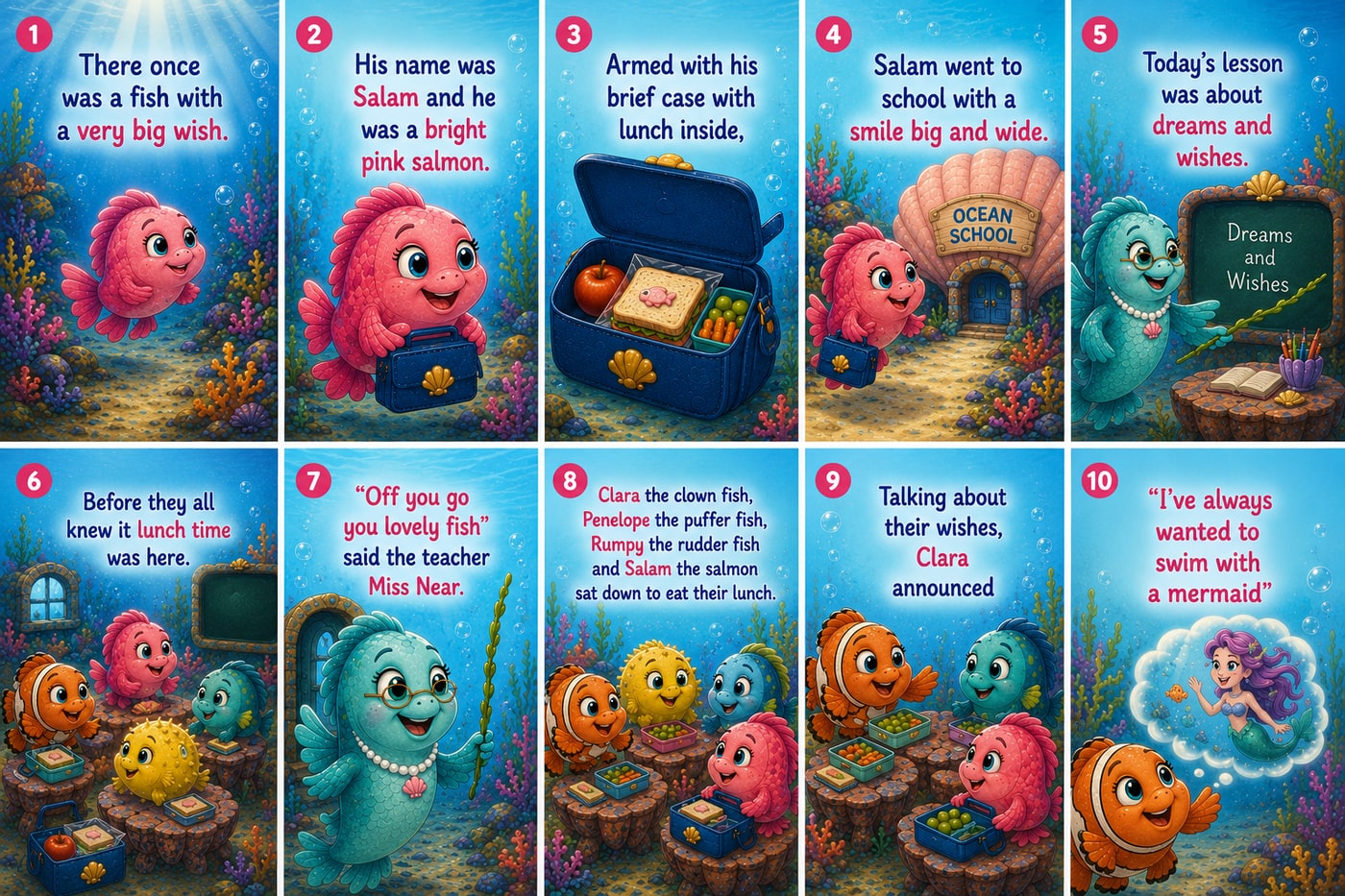
That is the principle universities need to take seriously. In an AI-rich environment, students should not only submit the thing. Where appropriate, they should be able to show how the thing came to be.
The first operational lever is assessment
If a university changes only one thing first, it should review assessment. Assessment is where the AI issue becomes unavoidable: academic integrity, student confidence, staff workload, learning design, employability and quality assurance all meet there.
An assessment review should ask: what learning is this task supposed to evidence? Is the final product enough? What AI use would support the learning? What AI use would undermine it? What process evidence would be proportionate? What does responsible disclosure look like?
This is not about making every assessment AI-proof. Some tasks may still need controlled conditions. Others may deliberately include AI. The point is to make the educational decision explicit.
The new skill is documented judgement
AI will keep changing. Individual tools will come and go. That is why universities should not build their response around one platform, one detector or one policy sentence.
The more durable aim is documented judgement: the ability to show how human thinking, ethical responsibility and disciplinary standards shaped AI-assisted work.
That is also a graduate capability. Employers may value students who can use AI tools, but they will need more than tool familiarity. They will need graduates who can judge outputs, check claims, protect data, explain decisions and know when human expertise matters.
The final product is no longer enough.Students need to evidence the thinking inside it.